The raw, unyielding beauty of concrete floors provides a unique foundation for an industrial-style bedroom. This design aesthetic, born from the repurposing of factories and warehouses, marries the starkness of exposed materials with the warmth of carefully chosen furnishings. The inherent coolness of concrete, often perceived as harsh, can be transformed into a sophisticated and inviting space through thoughtful integration of texture, lighting, and carefully selected décor.
Understanding the interplay of light and shadow on these surfaces is crucial to achieving the desired ambiance.
This exploration delves into the multifaceted aspects of designing an industrial bedroom with concrete floors, encompassing design aesthetics, furniture selection, material integration, and practical solutions for addressing the challenges presented by concrete. We’ll examine various design styles, lighting schemes, and acoustic considerations, providing a comprehensive guide to crafting a space that’s both visually stunning and functionally comfortable.
Design Aesthetics
The inherent starkness of concrete floors in an industrial bedroom presents a unique opportunity to explore diverse design aesthetics. Successfully integrating these floors requires a careful balance between embracing the raw industrial elements and introducing residential warmth and comfort. This balance can be achieved through thoughtful selection of color palettes, materials, and lighting schemes.
Industrial Chic with a Modern Twist
This style celebrates the raw beauty of industrial materials while incorporating modern minimalist elements for a sophisticated feel. The color palette leans towards neutrals—greys, blacks, and whites—with accents of deep blues or metallics. Materials such as exposed brick, steel, and polished concrete are complemented by sleek, modern furniture with clean lines. Think a dark grey concrete floor paired with a black metal bed frame, white linen bedding, and a grey concrete side table with a polished brass lamp.
This approach maintains the industrial feel while preventing the space from feeling cold or harsh.
Rustic Industrial with Warm Accents
This style softens the industrial aesthetic with the introduction of warm, natural elements. The color palette shifts towards warmer neutrals, including browns, creams, and muted oranges. Materials such as reclaimed wood, exposed brick, and leather are combined with the concrete floor to create a more inviting and lived-in atmosphere. Imagine a bedroom with a light brown wood headboard, a distressed leather armchair, and warm-toned area rugs strategically placed over the concrete floor to mitigate its coldness.
The inclusion of plants further enhances the warmth and natural feel.
Minimalist Industrial with Metallic Accents
This approach prioritizes simplicity and functionality. The color palette is extremely limited, often featuring monochrome schemes with black, white, and grey dominating. Materials are kept to a minimum, with a focus on clean lines and functionality. Metallic accents—such as brushed steel or copper—are strategically incorporated to add visual interest and a touch of industrial character. A minimalist industrial bedroom might feature a white-painted brick wall, a sleek black metal bed frame, and a few carefully chosen copper accessories against the backdrop of the concrete floor.
The overall effect is clean, sophisticated, and effortlessly cool.
Mood Board: Juxtaposition of Raw and Residential Elements
The following mood board illustrates the successful integration of raw industrial elements with softer residential features.
|
Image Description: A close-up of exposed brick wall, showcasing its rough texture and uneven surface. The color is a muted reddish-brown, showing variations in tone and shade. The image emphasizes the raw, unrefined character of the material. |
Image Description: A polished steel pendant light fixture, displaying a minimalist design with clean lines and a smooth, reflective surface. The light is a cool, metallic grey, and its simple form contrasts with the more rustic elements. |
|
Image Description: A plush, cream-colored sheepskin rug, emphasizing its soft texture and fluffy appearance. The rug’s color is a warm, inviting off-white, providing a stark contrast to the cooler tones of the industrial elements. |
Image Description: A dark grey concrete floor, showing its smooth, polished surface. The image emphasizes the floor’s clean lines and even texture, highlighting its modern industrial appeal. The grey tone is a cool, neutral shade. |
Lighting Schemes for Industrial Bedrooms
Appropriate lighting is crucial for setting the mood in an industrial bedroom.
Ambient Lighting
Ambient lighting provides overall illumination, creating a comfortable and functional space. Recessed lighting in the ceiling, combined with strategically placed wall sconces, offers a balanced distribution of light, minimizing harsh shadows often associated with high ceilings in industrial spaces. The use of warm-toned LED bulbs softens the industrial aesthetic and enhances the residential feel.
Accent Lighting
Accent lighting highlights specific features, such as artwork or architectural details. Industrial-style pendant lights suspended over the bed or a strategically placed floor lamp can create focal points and add visual interest. Using dimmer switches allows for adjustment of brightness, creating different moods depending on the time of day or occasion.
Task Lighting
Task lighting provides focused illumination for specific activities, such as reading or getting ready in the morning. A bedside lamp with a flexible arm allows for customized illumination, while a desk lamp provides focused light for working or studying. Choosing lamps with metallic finishes or exposed bulbs complements the industrial aesthetic.
Furniture Selection & Placement
The selection and placement of furniture in an industrial-style bedroom with concrete floors are crucial for achieving both aesthetic appeal and functional efficiency. The raw, often cold nature of concrete necessitates careful consideration of material choices and spatial arrangement to create a warm, inviting, and comfortable atmosphere. The inherent strength and durability of concrete, however, offer opportunities for bold design choices and robust furniture pieces.
Comparison of Three Bed Frame Styles for Industrial Bedrooms
Three bed frame styles particularly well-suited to industrial aesthetics are the metal platform bed, the reclaimed wood bed, and the minimalist metal frame with a headboard. The metal platform bed, often constructed from steel or iron, provides a sturdy and visually striking base, reflecting the industrial emphasis on functionality and raw materials. Its design frequently features simple lines and a matte black or dark grey finish.
Reclaimed wood beds, on the other hand, introduce a contrasting element of warmth and texture, utilizing salvaged lumber with visible imperfections and unique grain patterns. These imperfections add character and tell a story, perfectly complementing the industrial aesthetic’s appreciation for history and repurposing. Finally, a minimalist metal frame with a headboard offers a clean, streamlined aesthetic. The frame itself might be slender and simple, while the headboard could be crafted from metal, wood, or even leather, offering opportunities for customization and personal expression.
The key is to maintain a balance between the raw industrial elements and softer textures to avoid a stark or overly cold feel.
Furniture Arrangement for an Industrial Bedroom
A well-designed furniture arrangement maximizes space and improves functionality within the bedroom. Traffic flow should be unobstructed, allowing for easy movement around the bed and other furniture pieces. Consider incorporating ample storage solutions to minimize clutter and maintain a clean aesthetic. The following textual floor plan illustrates a suggested arrangement:
| Furniture | Dimensions (approx.) | Material Description |
|---|---|---|
| Queen-sized Metal Platform Bed | 60″ x 80″ | Black powder-coated steel frame, sturdy construction |
| Two Metal Nightstands | 18″ x 16″ x 24″ | Matching black powder-coated steel with simple geometric designs; drawers constructed from reclaimed wood. |
| Industrial-style Chest of Drawers | 36″ x 18″ x 30″ | Reclaimed wood with metal drawer pulls; distressed finish |
| Full-length Mirror | 72″ x 24″ | Metal frame with antique brass finish. |
| Rug | 8′ x 10′ | Thick, woven rug with neutral tones to provide warmth and contrast against the concrete floor. |
Nightstand Options for an Industrial Bedroom
Three distinct nightstand options effectively complement the industrial aesthetic. First, a simple metal nightstand with a single drawer offers functionality and a clean aesthetic. The metal can be powder-coated in a dark color, echoing the bed frame. The drawer provides essential storage for bedside necessities. Second, a reclaimed wood nightstand with metal accents, perhaps with visible nail heads or metal banding, combines rustic charm with industrial elements.
Open shelving can be incorporated to display personal items. Third, a repurposed industrial piece, such as a small metal cabinet or tool chest, can be uniquely transformed into a nightstand. This option adds a significant layer of character and individuality, reflecting the industrial design’s emphasis on repurposing and creative reuse. All options should incorporate durable materials that can withstand daily use and complement the overall design scheme.
Incorporating Textures & Materials
The successful integration of textures and materials is paramount in achieving a balanced and visually engaging industrial bedroom design, particularly when working with the inherent starkness of concrete floors. The interplay of contrasting textures—rough against smooth, hard against soft—creates visual depth and prevents the space from feeling cold or monotonous. Careful material selection enhances the industrial aesthetic while introducing warmth and personality.The strategic use of diverse textures and materials is crucial in mitigating the potential harshness of an industrial aesthetic while simultaneously enhancing its inherent appeal.
By carefully balancing contrasting textures and incorporating natural elements, a sophisticated and inviting atmosphere can be created.
Textural Contrasts and Their Design Impact
The following table illustrates how contrasting textures contribute to the overall design harmony within an industrial bedroom. The juxtaposition of these elements prevents visual monotony and creates a dynamic, layered effect.
| Texture | Material Example | Design Impact |
|---|---|---|
| Rough | Exposed brick, textured concrete walls | Adds visual interest, creates a sense of history and authenticity. Provides a grounding element against smoother surfaces. |
| Smooth | Polished concrete floor, sleek metal furniture | Introduces a sense of modernity and cleanliness. Creates a contrast to rougher textures, adding visual dynamism. |
| Soft | Woven textiles (rugs, throws), plush velvet upholstery | Adds warmth, comfort, and tactility. Balances the hardness of industrial materials, creating a more inviting space. |
| Hard | Steel shelving, glass partitions | Provides a sense of structure and functionality. Reinforces the industrial aesthetic while offering visual clarity. |
Metal Finishes in Industrial Bedroom Design
The selection of metal finishes significantly influences the overall mood and aesthetic of an industrial bedroom. Different finishes evoke distinct feelings and contribute to the space’s visual narrative.
- Brushed Steel: Offers a sleek, contemporary look. Its subtle texture reflects light softly, creating a sophisticated and less harsh industrial feel compared to highly polished metals. It pairs well with lighter color palettes.
- Black Iron: Projects a more rugged, vintage industrial aesthetic. Its dark tones create a dramatic and moody atmosphere, ideal for those who prefer a darker, more masculine design. Black iron accents can be used sparingly to avoid overwhelming the space.
- Copper: Introduces warmth and a touch of luxury. Its rich, reddish-brown hue adds visual interest and contrasts beautifully with cooler tones. Copper accents can be used to highlight specific features or create focal points within the room. Its natural patina develops over time, adding character to the space.
Incorporating Natural Elements to Soften Industrial Design
The incorporation of natural elements is crucial for balancing the hard lines and potentially cold feel of an industrial space. This approach introduces warmth, texture, and a connection to the outdoors, creating a more inviting and comfortable environment.
- Wooden Flooring or Accents: Layering a wooden floor over sections of the concrete floor, or incorporating wooden furniture pieces, introduces warmth and organic texture. The contrast between the smooth concrete and the natural grain of the wood adds visual depth and creates a pleasing interplay of textures. For example, a reclaimed wood headboard or bedside tables can significantly soften the industrial aesthetic.
- Indoor Plants: Strategically placed indoor plants introduce life, color, and texture to the space. Large potted plants in corners or along walls can break up the monotony of hard surfaces and create a sense of calm. Trailing plants hanging from the ceiling or shelves can also add visual interest and softness.
- Natural Fiber Rugs: A large, textured rug made from natural fibers such as jute, wool, or sisal can significantly soften the coldness of concrete floors. The organic texture and natural color palette of these rugs create a warm and inviting focal point in the room. These rugs also help to define different zones within the space.
Addressing Concrete Floor Challenges
Concrete floors, while aesthetically pleasing in an industrial-style bedroom, present unique challenges regarding warmth, acoustics, and maintenance. Their inherent properties—high thermal conductivity and density—lead to cold surfaces and sound reverberation. However, with careful planning and the application of appropriate materials and techniques, these challenges can be effectively mitigated, creating a comfortable and functional living space.
Methods for Enhancing Thermal Comfort
Concrete’s high thermal conductivity means it readily transfers heat away from the body, resulting in a cold feeling. Several strategies can effectively counter this. The most effective solution is underfloor heating, an electric or hydronic system embedded beneath the concrete slab or installed on top with appropriate decoupling membranes. Electric systems offer quicker heating responses, while hydronic systems (using hot water) tend to be more energy-efficient over time.
Another approach involves strategically placed rugs. Large, thick rugs made from natural fibers like wool or jute provide excellent insulation and significantly reduce the sensation of cold. These rugs not only add warmth but also contribute to the overall aesthetic appeal of the room. Finally, the use of radiant barrier paint on the underside of the concrete slab can help reflect radiant heat back into the room, reducing heat loss.
Acoustic Management Strategies
Concrete’s density contributes to sound reverberation, potentially creating an echoey and uncomfortable environment. Addressing this requires a multi-pronged approach. Thick, heavy rugs, as mentioned previously, can absorb sound effectively. Furthermore, strategically placed acoustic panels on walls can significantly reduce sound reflections. These panels, available in various designs and materials (e.g., fabric-wrapped acoustic foam, wood panels with acoustic backing), effectively absorb sound waves, preventing echoes and improving sound clarity.
For more comprehensive soundproofing, consider adding a layer of sound-dampening material, such as resilient channels, to the wall structure during construction. This decoupling prevents sound transmission through the walls. Additionally, the use of heavy curtains can absorb sound and reduce noise transfer from outside.
Concrete Floor Cleaning and Maintenance
Maintaining concrete floors in a bedroom requires a consistent cleaning regime tailored to the specific finish. First, regular sweeping or vacuuming removes loose dust and debris, preventing scratches from abrasive particles. This is crucial for preserving the floor’s appearance. Second, periodic mopping with a pH-neutral cleaner is essential. Avoid harsh chemicals or acidic cleaners, as these can damage the concrete’s surface or dull its finish.
A simple solution of warm water and a mild detergent is often sufficient. For stubborn stains, a specialized concrete cleaner designed for the specific type of concrete sealant (if present) should be used, following the manufacturer’s instructions meticulously. Finally, for polished concrete floors, regular polishing using a specialized concrete polishing machine and polishing compounds will help maintain their shine and protect against damage.
This helps to maintain the integrity of the polished surface and restore its luster.
Visual Representation
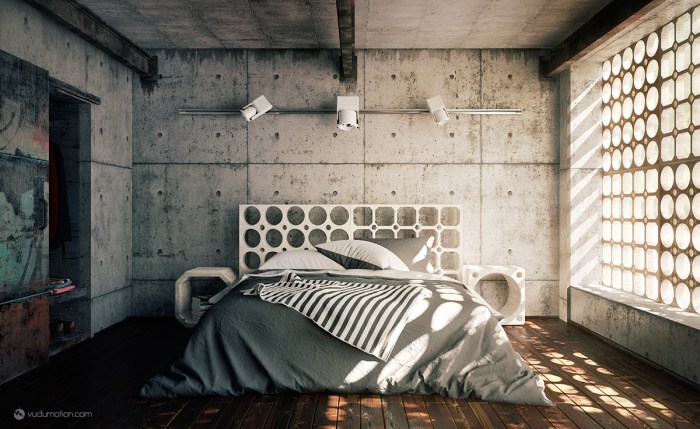
The visual impact of an industrial bedroom with concrete floors hinges on the strategic interplay of light and shadow, raw materials, and carefully chosen accents. The inherent coolness of concrete provides a neutral canvas, allowing the warmth of other materials and the drama of light to define the space’s character. The objective is to create a balance between the starkness of industrial elements and the inviting comfort of a bedroom.The inherent properties of light and shadow are crucial in shaping the perceived atmosphere.
Light sources, both natural and artificial, interact with the rough textures of the concrete and metal, creating depth and visual interest. The way light falls on a surface dictates the perception of texture and color; a low-angle light will accentuate surface irregularities, while a diffused light will soften the overall appearance.
Light and Shadow in an Industrial Bedroom
Imagine a large, south-facing window flooding the room with natural light. The sun’s rays, depending on the time of day, might cast long shadows from the exposed brick walls or metal pipes, creating a dynamic interplay of light and dark across the concrete floor. These shadows aren’t merely imperfections; they are design elements, adding depth and drama to the otherwise minimalist aesthetic.
A strategically placed pendant lamp over the bed, perhaps with a cage-like industrial design, would cast a warmer, more concentrated light, creating a cozy focal point in contrast to the cooler, more diffuse natural light. In the corners, strategically placed floor lamps with adjustable heads could illuminate specific areas, highlighting textural details and creating pools of light against the dark shadows.
This interplay of light and shadow transforms the potentially harsh concrete floor into a visually interesting and even romantic space.
Textural Detail: Metal Shelf and Plants
Consider a corner of the bedroom: a raw metal shelf, its surface subtly textured with the marks of its industrial past, is mounted against a section of exposed brick. Upon this shelf, several potted succulents and air plants rest. The light, perhaps from a nearby window, strikes the metal shelf, highlighting its subtle imperfections and the slight patina that develops over time.
The rough texture of the metal contrasts sharply with the smooth, almost velvety texture of the succulents’ leaves. Shadows fall behind the plants, accentuating their forms and creating a sense of depth. The interplay of light and shadow on the metal shelf’s surface is particularly striking, with the brighter areas reflecting light and the shadowed areas creating a sense of three-dimensionality.
The warmth of the plants contrasts with the cool, metallic tones of the shelf, creating a visual balance. The overall effect is a carefully composed still life, showcasing the beauty of contrasting textures and the dramatic effect of light.
Reclaimed Wood and Concrete: A Study in Contrast
The introduction of reclaimed wood elements, such as a headboard or a bedside table, significantly alters the visual landscape. The rich, warm tones of the wood—ranging from deep browns to honeyed golds, depending on the type of wood—provide a strong contrast to the cool gray of the concrete floor. The texture contrast is equally significant: the smooth, sometimes polished surface of the concrete is juxtaposed against the rugged, often knotty texture of reclaimed wood.
The grain of the wood, visible in the varying shades and patterns, adds visual interest and a sense of organic warmth, softening the industrial austerity of the concrete. This combination creates a visually compelling space, where the contrasting colors and textures enhance each other, rather than clash. The color contrast—the cool, neutral tones of the concrete against the warm, earthy tones of the wood—creates a visually dynamic and harmonious balance.
Summary
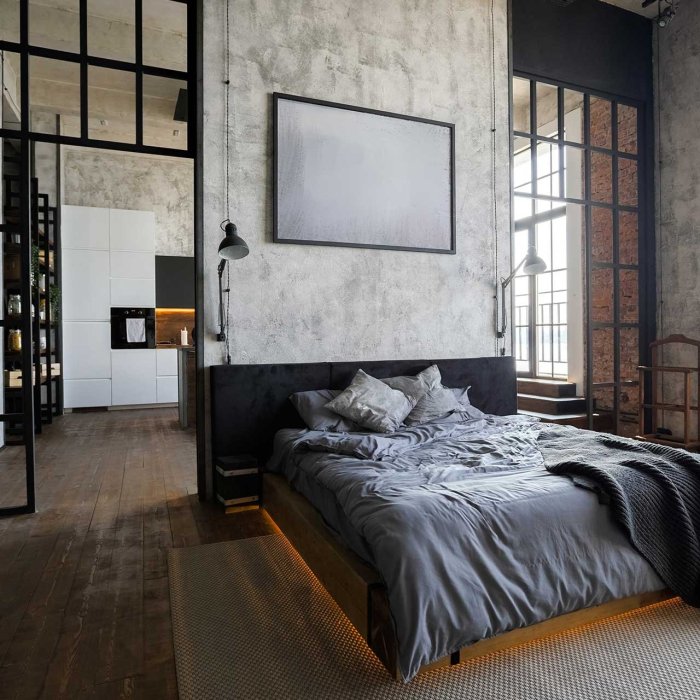
Creating an industrial bedroom with concrete floors is a journey of balancing contrasting elements – the ruggedness of industrial materials with the softness of residential comforts. By understanding the interplay of texture, light, and carefully selected furnishings, one can transform a potentially stark space into a haven of sophisticated style and undeniable comfort. The key lies in the intentional juxtaposition of raw materials with warmer accents, creating a space that’s both visually striking and remarkably livable.
From the careful selection of a bed frame to the strategic placement of lighting, each element contributes to the overall harmony and aesthetic appeal of this unique design.
Essential FAQs
Can I use area rugs over concrete floors to add warmth?
Absolutely! Area rugs are essential for adding warmth, comfort, and visual interest to concrete floors. Choose rugs with thick pile for maximum insulation and softness underfoot.
How do I prevent concrete floors from feeling cold in winter?
In addition to rugs, underfloor heating systems provide effective radiant warmth. Alternatively, consider using thicker carpeting or layering rugs for increased insulation.
Are concrete floors difficult to maintain?
Concrete floors are relatively low-maintenance. Regular sweeping or vacuuming removes dust and debris. Occasional mopping with a pH-neutral cleaner keeps them looking their best. Avoid harsh chemicals that can damage the concrete’s surface.
What type of paint is best for concrete floors?
Epoxy paints are specifically designed for concrete and offer excellent durability and stain resistance. Water-based acrylic paints can also be used, but they generally offer less durability.
How can I improve the acoustics in a bedroom with concrete floors?
Concrete floors can be quite reflective of sound. Area rugs, thick curtains, and strategically placed acoustic panels can significantly improve sound absorption, reducing echoes and creating a more peaceful atmosphere.
Leave a Reply