Transforming a small, unfinished bathroom into a functional and aesthetically pleasing space presents a unique challenge, demanding creative solutions and careful planning. This undertaking involves more than just slapping on paint; it requires a nuanced understanding of space optimization, budget-conscious material selection, and adherence to plumbing and electrical codes. From strategically placed mirrors to maximize light reflection and create the illusion of spaciousness, to the careful selection of low-flow fixtures to conserve water, every decision contributes to the final result.
This exploration delves into practical techniques, budget-friendly options, and design considerations to guide you through the process of creating a stunning small bathroom, even from a raw, unfinished state.
The journey begins with understanding the fundamental principles of space optimization. Built-in shelving, strategic use of mirrors, and clever storage solutions are key to maximizing functionality within limited square footage. Subsequently, we’ll explore budget-friendly materials, focusing on cost-effective yet stylish options for tiles, vanities, and lighting. Crucially, we’ll address the essential aspects of plumbing and electrical work, emphasizing code compliance and water conservation.
Finally, the focus shifts to the visual appeal, examining various design styles and how to incorporate unique elements to create a personalized and inviting atmosphere. Through careful planning and execution, even the smallest unfinished bathroom can be transformed into a haven of comfort and style.
Space Optimization Techniques for Small Bathrooms
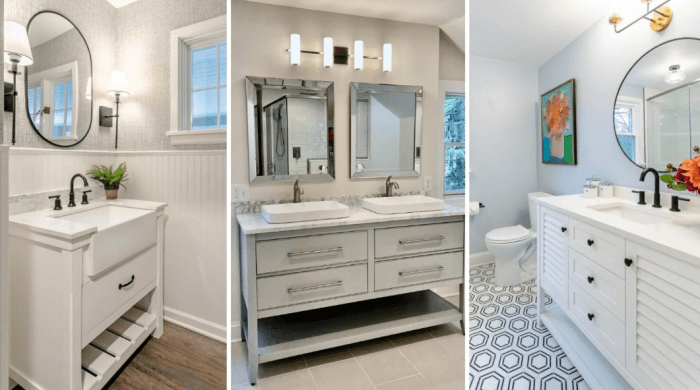
Transforming a small, unfinished bathroom into a functional and aesthetically pleasing space requires strategic planning and the application of sound design principles. The limited square footage necessitates a focus on maximizing vertical space, employing clever storage solutions, and leveraging optical illusions to create a sense of spaciousness. This approach blends practicality with visual appeal, resulting in a bathroom that feels larger than its actual dimensions.
Bathroom Layout with Built-in Shelving
A well-designed layout is paramount in a small bathroom. Consider a 5′ x 6′ space. A vanity unit (2′ x 2′) positioned against one wall could incorporate a built-in sink and ample storage below. Opposite this, a shower enclosure (3′ x 3′) maximizes water efficiency and minimizes floor space. The remaining wall space can be dedicated to built-in shelving (1′ x 6′), constructed from moisture-resistant materials like melamine-coated MDF.
These shelves provide storage for toiletries, towels, and other bathroom essentials. The shelves can be divided into sections of varying depths and heights to accommodate different items. A vertical medicine cabinet (1′ x 2′) above the vanity adds additional storage without encroaching on floor space. The color scheme should employ light and neutral tones to amplify the feeling of spaciousness.
Illusions of Space: Mirrors and Light Colors
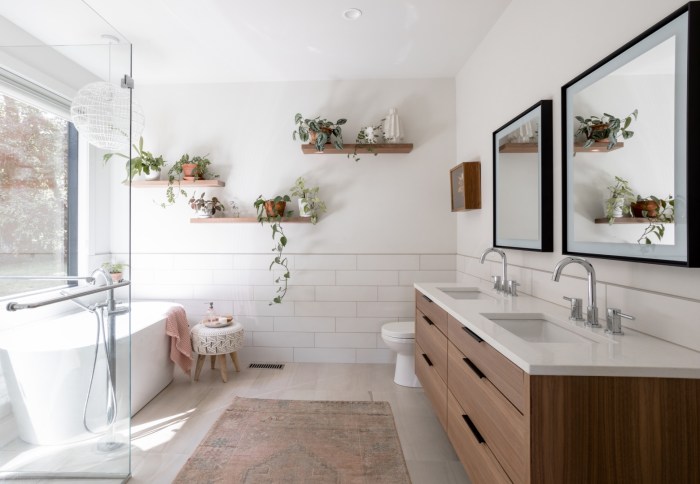
The strategic use of mirrors and light colors significantly impacts the perceived size of a small bathroom. Mirrors reflect light, creating the illusion of depth and expanding the visual space. Light colors, especially whites and pastels, also reflect light, further enhancing this effect. The following table summarizes the pros and cons of these techniques:
| Technique | Description | Pros | Cons |
|---|---|---|---|
| Large Mirrors | Placement of a large mirror, ideally opposite a window or light source. | Doubles the perceived size of the room, brightens the space. | Can be expensive, requires careful placement to avoid distortions. |
| Light Colors | Painting walls and using light-colored fixtures and accessories. | Reflect light, create an airy feel, make the space seem larger. | May show dirt more easily, might require more frequent cleaning. |
Storage Improvement Strategies
Effective storage solutions are crucial in small bathrooms. Three key strategies are:
Implementing these strategies ensures maximum utilization of available space and keeps the bathroom organized and clutter-free.
- Recessed shelving: Building shelves into the walls creates hidden storage without sacrificing floor space. This is especially effective in areas above the toilet or under the vanity. The depth of these shelves can be customized to fit the specific needs of the user.
- Over-the-door organizers: These organizers hang on the back of the bathroom door, providing extra storage for toiletries and cleaning supplies without occupying valuable floor or wall space. They are readily available in various sizes and designs to match different bathroom aesthetics.
- Vertical storage units: Tall, narrow cabinets or shelving units maximize vertical space. These units can be placed in corners or along walls, providing ample storage without overwhelming the small space. The units should be designed with adjustable shelves for flexible storage options.
Utilizing Vertical Space
Vertical space is often underutilized in small bathroom design. Think beyond standard shelving. Consider installing tall, narrow cabinets that reach the ceiling. These can house towels, toiletries, and cleaning supplies, freeing up valuable floor space. A visually appealing approach involves using a combination of open and closed storage.
Open shelving can display decorative items while closed cabinets conceal less visually appealing items. For example, a tall, narrow cabinet with glass-fronted doors at the top could display decorative bottles and jars, while the lower section, with solid doors, could store cleaning supplies. Another example is using the space above the toilet for a narrow, floor-to-ceiling cabinet. This maximizes vertical space while keeping the floor clear.
Visualize a sleek, white cabinet extending from floor to ceiling, seamlessly integrating with the overall bathroom design.
Budget-Friendly Finishing Materials and Fixtures
Transforming a small, unfinished bathroom into a stylish and functional space doesn’t require breaking the bank. Careful selection of materials and fixtures can achieve a high-impact renovation while remaining within a reasonable budget. This section details cost-effective options that balance affordability with aesthetic appeal and durability. We’ll explore budget-friendly tile choices, compare various vanity types, design a cost-effective lighting scheme, and Artikel the steps for installing a simple yet effective shower kit.
Affordable and Stylish Bathroom Tile Options
Selecting the right tiles is crucial for a small bathroom, as they significantly impact the visual perception of space. Lighter colors and smaller tiles generally create a feeling of spaciousness. Here are some budget-friendly options:
- Ceramic Tiles: Ceramic tiles offer a wide range of colors, patterns, and finishes at a relatively low cost. Expect to pay between $1-$5 per square foot, depending on the quality and design. A classic white subway tile creates a clean, timeless look, while more textured options can add visual interest. Imagine a small bathroom brightened by glossy white ceramic tiles, reflecting light and enhancing the feeling of spaciousness.
- Porcelain Tiles: Slightly more expensive than ceramic, porcelain tiles are more durable and water-resistant, making them ideal for bathrooms. Prices typically range from $2-$8 per square foot. A light grey porcelain tile with a subtle texture can add a touch of sophistication without overwhelming a small space. Think of a subtle, textured pattern that adds visual depth without being overly busy.
- Glass Tiles: Glass tiles can add a modern and luxurious feel, reflecting light and creating a sense of spaciousness. Prices vary widely, but you can find budget-friendly options starting around $3-$10 per square foot. A small mosaic of clear or lightly tinted glass tiles as an accent wall can make a big impact. Visualize a shimmering accent wall behind a vanity, adding a touch of elegance.
Comparison of Budget-Friendly Vanities
The vanity is a focal point in any bathroom, and choosing the right one is essential for both functionality and aesthetics. Here’s a comparison of three budget-friendly options:
| Vanity Type | Material | Pros | Cons |
|---|---|---|---|
| Pre-fabricated Vanity | Laminate, MDF | Affordable, readily available, easy to install | May not be as durable as solid wood, limited customization options |
| DIY Vanity from repurposed materials (e.g., old dresser) | Reclaimed wood, painted MDF | Unique, eco-friendly, highly customizable | Requires DIY skills, may require more time and effort |
| Simple pedestal sink | Ceramic or porcelain | Space-saving, clean lines, easy to clean | Limited storage, may not be suitable for all bathroom layouts |
Cost-Effective Lighting Plan for a Small Bathroom
Proper lighting is essential for creating a functional and inviting atmosphere in a small bathroom. A layered approach using different types of lighting maximizes both functionality and ambiance.
- Recessed Lighting: Recessed lights provide general illumination, evenly distributing light across the ceiling. Their unobtrusive design helps maintain a clean, uncluttered look, ideal for small spaces. Install 2-3 recessed lights, depending on the bathroom’s size, ensuring even coverage. The effect is a bright, evenly lit space, preventing dark corners.
- Vanity Lighting: Vanity lights illuminate the sink area, providing task lighting for applying makeup or shaving. Consider LED vanity lights with adjustable brightness for optimal control. Two wall-mounted sconces flanking the mirror create a balanced and functional light source. The result is focused illumination on the vanity area, enhancing functionality and reducing shadows.
- Accent Lighting: A small, waterproof LED strip light installed under the vanity cabinet adds a subtle, ambient glow. This creates a warm, inviting atmosphere and subtly illuminates the floor, making the space feel larger. The visual effect is a gentle, welcoming light, enhancing the overall ambiance.
Installing a Budget-Friendly Shower Kit
A pre-fabricated shower kit offers a simple and cost-effective solution for a small bathroom. These kits typically include a shower pan, walls, and a door, simplifying the installation process.
- Prepare the Shower Area: Ensure the floor is level and waterproofed. This may involve installing a waterproof membrane or tiling the shower floor.
- Assemble the Shower Pan: Follow the manufacturer’s instructions to assemble the shower pan, ensuring it is level and securely placed.
- Install the Shower Walls: Attach the shower walls to the shower pan, ensuring they are plumb and level. Use appropriate sealant to prevent water leaks.
- Install the Shower Door: Carefully install the shower door, following the manufacturer’s instructions. Ensure the door seals properly to prevent water leakage.
- Caulk and Finish: Apply caulk around the edges of the shower pan and walls to create a watertight seal. Finish with any necessary trim pieces.
Plumbing and Electrical Considerations
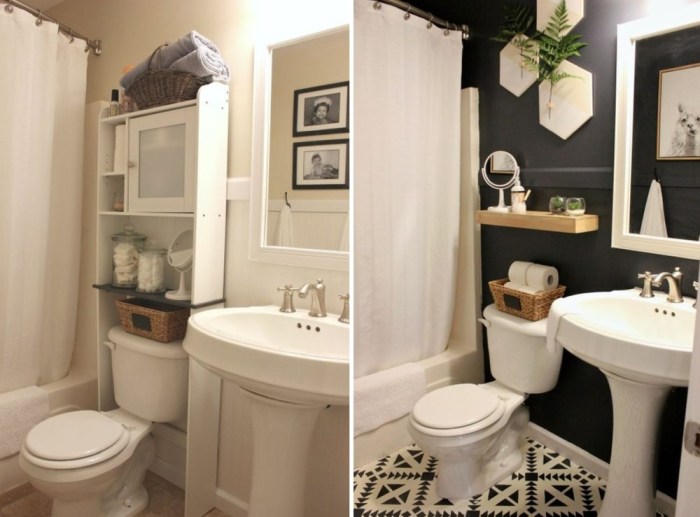
Transforming an unfinished small bathroom into a functional and safe space necessitates careful planning and execution of plumbing and electrical work. Ignoring these crucial aspects can lead to costly repairs, safety hazards, and significant inconvenience. This section details essential considerations for ensuring a compliant and efficient bathroom installation.
Rough-in Plumbing for Small Bathrooms
Rough-in plumbing involves installing the water supply and drainage pipes before the walls and flooring are finished. Precise measurements and adherence to building codes are paramount. A typical small bathroom rough-in might include a toilet flange, supply lines for the sink and toilet, and drain lines for the sink, shower (if included), and toilet. These lines are typically made of PVC or ABS plastic for their durability and resistance to corrosion.
Proper sloping of drain lines (typically 1/4 inch per foot) is critical to prevent clogs. The toilet flange, a metal ring bolted to the floor, provides a secure base for the toilet. Precise positioning of all components is essential to ensure proper fixture placement and efficient water flow. Imagine a diagram showing the toilet flange centrally located, with supply lines running from shut-off valves (located behind the wall) to the toilet and sink, and drain lines connecting the sink and toilet to the main drain stack.
The drain lines slope gently downward towards the main drain. All connections should be carefully sealed with appropriate plumbing cement to prevent leaks. Specifications for pipe diameter and materials should adhere to local building codes.
Potential Electrical Code Violations and Solutions
Small bathrooms, due to their limited space, often present challenges in meeting electrical codes. Common violations include insufficient GFCI (Ground Fault Circuit Interrupter) protection, inadequate lighting, and improper wiring. GFCI outlets are mandatory within six feet of any water source to prevent electric shock. Lack of GFCI protection is a significant safety hazard. Solutions involve installing GFCI outlets in appropriate locations.
Inadequate lighting can create unsafe conditions, particularly in smaller spaces. Solutions include installing appropriately rated and correctly wired lighting fixtures, potentially including exhaust fans with integrated lighting for ventilation and illumination. Improper wiring, such as using incorrect gauge wire or failing to properly ground fixtures, poses a fire hazard. Solutions require careful adherence to wiring diagrams and local electrical codes, potentially requiring professional electrical work to ensure safety and compliance.
Low-Flow Toilet and Faucet Installation
Installing low-flow fixtures is crucial for water conservation. A low-flow toilet typically uses 1.28 gallons or less per flush, significantly reducing water consumption compared to older models. Installation involves removing the old toilet, aligning the new toilet with the existing flange, and securing it with bolts. A wax ring creates a watertight seal between the toilet and the flange.
Connecting the water supply line completes the installation. Low-flow faucets typically use 1.5 gallons per minute or less. Installation involves replacing the old faucet cartridges with low-flow cartridges and ensuring proper sealing to prevent leaks. A step-by-step process for a low-flow toilet might include: (1) Turning off the water supply, (2) disconnecting the water supply line, (3) removing the old toilet, (4) applying a new wax ring, (5) setting the new toilet in place, (6) securing the toilet with bolts, (7) reconnecting the water supply line, (8) testing for leaks.
A similar process applies to low-flow faucets, with additional steps depending on the faucet type.
Ventilation in Small Bathrooms
Proper ventilation is essential to prevent mold and mildew growth, which are common in small, humid bathrooms. Insufficient ventilation can lead to respiratory problems and structural damage. A properly sized exhaust fan, typically rated for the bathroom’s cubic footage, should be installed to remove moisture-laden air. The fan should be vented to the outside to effectively remove moisture.
Solutions for improving air quality include installing a high-efficiency exhaust fan with a timer or humidity sensor for automatic operation. Adequate natural ventilation, where possible, can supplement mechanical ventilation. Consider the size of the bathroom when selecting an exhaust fan; a larger bathroom requires a more powerful fan. For example, a 50-square-foot bathroom might need a fan with a CFM (cubic feet per minute) rating of 50 or higher.
Regular cleaning of the exhaust fan and vent is crucial for maintaining optimal performance.
Visual Appeal and Design Elements
The visual appeal of a small bathroom is paramount; it dictates the overall mood and functionality of the space. Careful consideration of design elements, color palettes, and material choices can transform a cramped, unfinished room into a relaxing and efficient oasis. The following sections explore three distinct design styles, practical applications of unique design elements, and a detailed example of a small bathroom incorporating a walk-in shower.
We will also examine how color and texture can contribute to a sense of spaciousness and calm.
Mood Board: Three Small Bathroom Design Styles
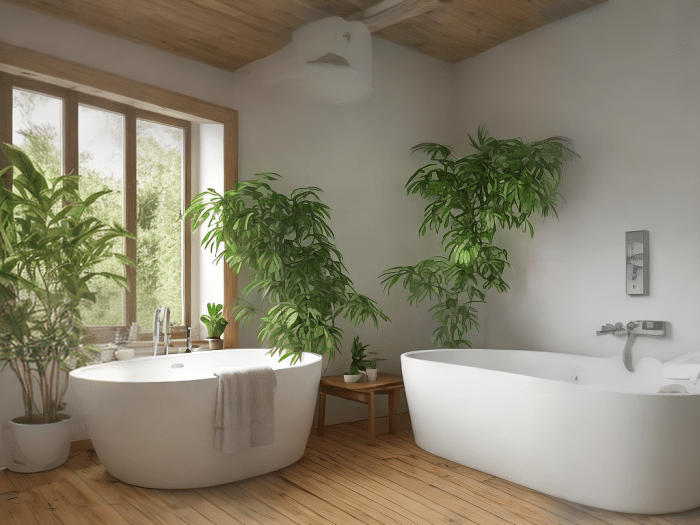
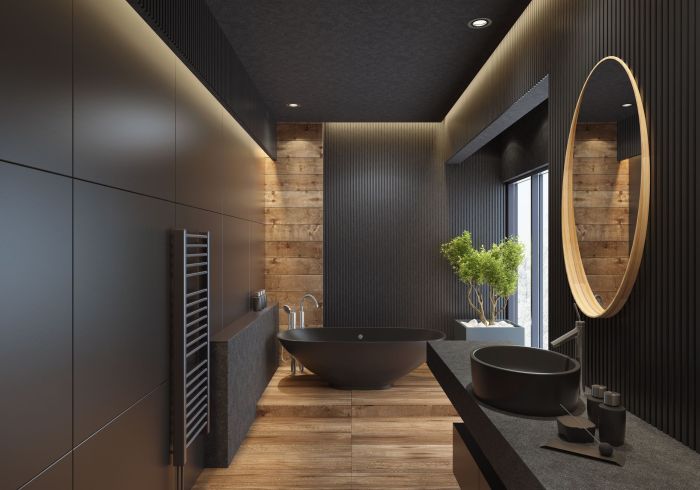
Three distinct design styles – modern, rustic, and minimalist – are presented below, each offering a unique aesthetic and approach to space optimization in a small bathroom. These styles demonstrate the versatility of design choices available even within a limited area.
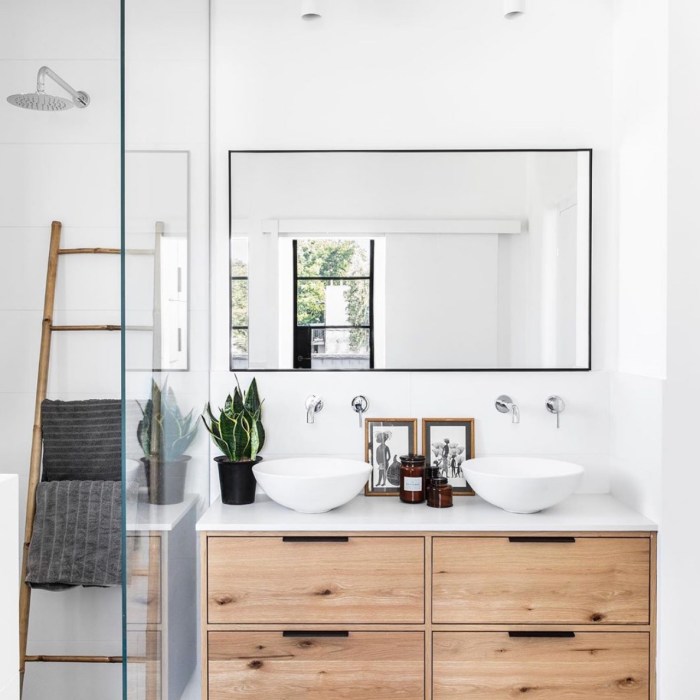
- Modern: This style emphasizes clean lines, sleek fixtures, and a neutral color palette. Imagine a space dominated by crisp white walls, complemented by matte black accents in the faucets and shower fittings. The flooring could be large-format, light-grey porcelain tiles, creating a sense of spaciousness. A minimalist vanity with integrated sink and ample storage would complete the look.
The overall feel would be sophisticated and uncluttered.
- Rustic: This style embraces natural materials and warm tones. Picture exposed brick walls (or brick-effect tiles), a wooden vanity with a distressed finish, and a shower with pebble-like mosaic tiles. The color palette would include earthy browns, creams, and muted greens. Natural light would be maximized, and perhaps a single, strategically placed pendant light with a rustic metal finish would add character.
The overall mood would be cozy and inviting.
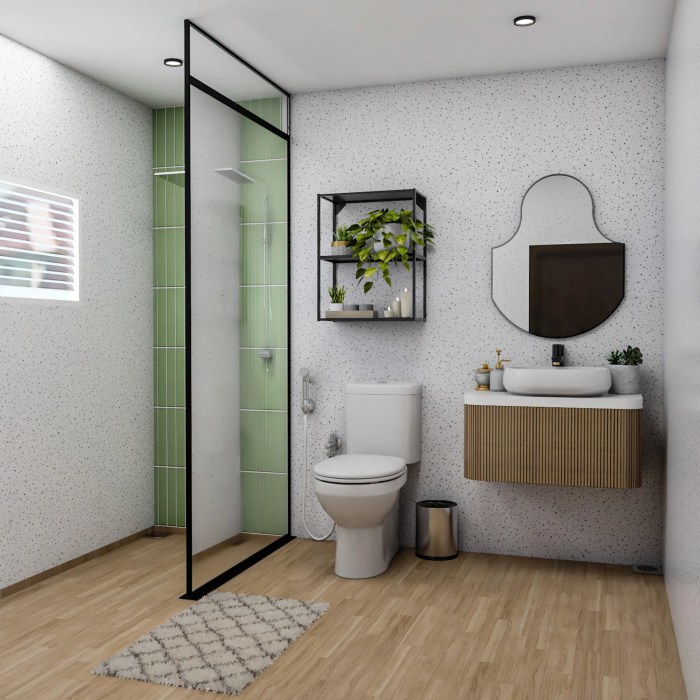
- Minimalist: This style prioritizes simplicity and functionality. Imagine a monochromatic scheme, perhaps using shades of grey and white. The walls would be smooth and unadorned, the flooring a simple, light-colored tile. A floating vanity with integrated storage would maximize floor space. The shower would be a simple, frameless enclosure with a single rainfall showerhead.
The overall effect would be clean, serene, and unfussy.
Incorporating Unique Design Elements
The strategic use of unique design elements can dramatically enhance the visual interest of a small bathroom. Even subtle additions can create a significant impact.
- Patterned Tiles: Using patterned tiles as a focal point on a single wall, such as the shower surround or behind the vanity, adds visual texture without overwhelming the space. A geometric pattern in a neutral color palette would work well in a modern bathroom, while a floral or arabesque pattern could enhance a rustic design.
- Interesting Lighting Fixtures: A statement lighting fixture, such as a unique pendant light or a stylish wall sconce, can become a focal point and draw the eye upwards, making the ceiling appear higher. The light fixture’s style should complement the overall design scheme; for instance, a sleek, minimalist fixture would be suitable for a modern bathroom, while a wrought iron fixture might be appropriate for a rustic design.
- Statement Mirrors: A large, uniquely framed mirror can not only be functional but also a striking design element. A mirror with an ornate frame can add elegance to a traditional design, while a simple, frameless mirror can enhance a minimalist space. Strategically placed mirrors can also create the illusion of more space by reflecting light and amplifying the perceived size of the room.
Small Bathroom Design with Walk-in Shower
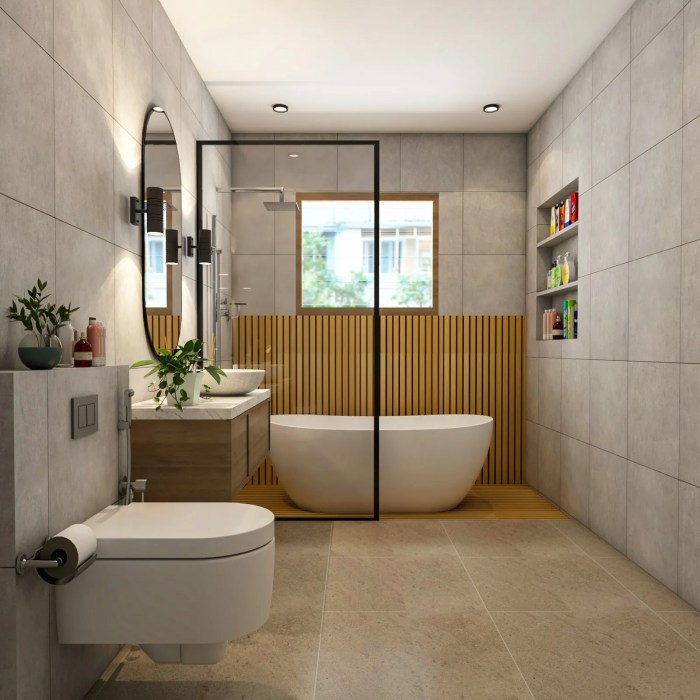
This design features a small bathroom (approximately 4ft x 6ft) with a walk-in shower.Imagine a space with white subway tiles on the walls, creating a clean and bright atmosphere. The floor is composed of large, light grey porcelain tiles for a sense of spaciousness. A small, floating vanity with a white countertop and a vessel sink sits against one wall.
The walk-in shower (3ft x 3ft) features clear glass walls and a rainfall showerhead, maximizing the sense of openness. The shower walls are clad in the same white subway tiles as the rest of the bathroom, creating a cohesive look. A small niche in the shower wall provides space for toiletries.
Color and Texture for Spaciousness and Calm
| Element | Description | Effect | Example |
|---|---|---|---|
| Wall Color | Light, neutral colors (white, light grey, pale blue) | Reflects light, making the space feel larger and brighter. | White subway tiles with grey grout. |
| Floor Color | Light-colored tiles or flooring (light grey, beige) | Creates a sense of continuity with the walls, minimizing visual breaks. | Large-format light grey porcelain tiles. |
| Texture | Smooth surfaces (polished tiles, glass shower enclosure) | Minimizes visual clutter and creates a sense of calm. | Frameless glass shower enclosure. |
| Accents | Subtle pops of color (towels, artwork) | Adds visual interest without overwhelming the space. | A set of sage green towels. |
Final Conclusion
Renovating a small, unfinished bathroom is a rewarding endeavor that blends creativity, practicality, and technical expertise. By carefully considering space optimization techniques, selecting budget-friendly yet stylish materials, ensuring compliance with plumbing and electrical codes, and incorporating thoughtful design elements, the transformation from a raw space to a functional and aesthetically pleasing bathroom becomes achievable. Remember, the key lies in strategic planning, meticulous execution, and a keen eye for detail.
The result? A small bathroom that punches far above its weight in style and functionality, a testament to the power of thoughtful design and careful craftsmanship.
Detailed FAQs
What are some common mistakes to avoid when renovating a small unfinished bathroom?
Common mistakes include neglecting proper ventilation, overlooking electrical code requirements, using dark colors that make the space feel smaller, and insufficient planning for storage.
How can I ensure proper ventilation in a small bathroom?
Install an exhaust fan with a high CFM (cubic feet per minute) rating and ensure it vents directly to the outside. Consider adding a window if possible for natural ventilation.
What are some eco-friendly options for a small bathroom renovation?
Use reclaimed or recycled materials, choose low-VOC paints, install low-flow toilets and faucets, and opt for energy-efficient lighting.
How much should I budget for a small unfinished bathroom renovation?
Costs vary greatly depending on materials and fixtures chosen. A basic renovation might cost a few thousand dollars, while a high-end remodel could cost tens of thousands.
Can I do some of the work myself to save money?
Many tasks, like painting and installing shelving, can be DIY projects. However, plumbing and electrical work should generally be left to licensed professionals.